

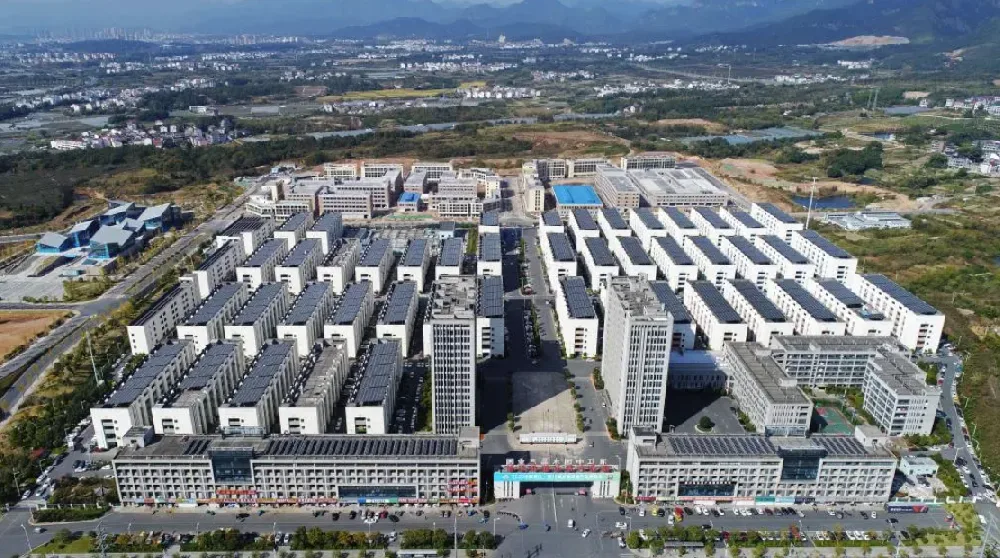
One compressor room per factory is the traditional way to power an industrial park. It is also the expensive way: five small rooms mean five sets of machines to buy, five service contracts, and five half-loaded compressors paying full power bills. The alternative is what SIND has just delivered for a multi-tenant industrial park: one centralized compressed air station that produces, dries, and meters all of the park’s air, then pipes it to each factory door as a utility
Why one station instead of many compressor rooms
Walk through most older parks and you will find the same pattern behind every production hall: a cramped compressor room, an oversized machine running unloaded most of the day, and a network nobody fully maps. Each plant solves the same problem separately, at a higher combined cost.
A centralized compressed air system turns air into shared infrastructure, closer to how a park already handles electricity and water. One engine room carries the compression, drying, and filtration duty for the whole site. Operating the station at a stable, high load — instead of ten machines idling at part load — is where the energy savings come from, and a single professional operations team replaces a patchwork of small maintenance agreements. When a new tenant builds a hall, the connection is a pipe flange at the property line, not a procurement project.
What SIND delivered
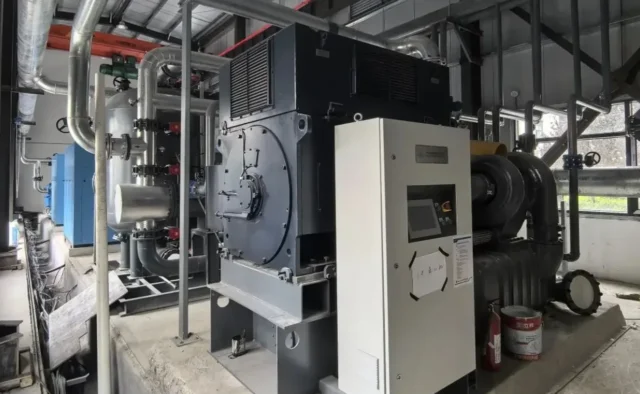
The project covers the full chain from ambient air to the park distribution ring, engineered and commissioned by SIND as one contract:
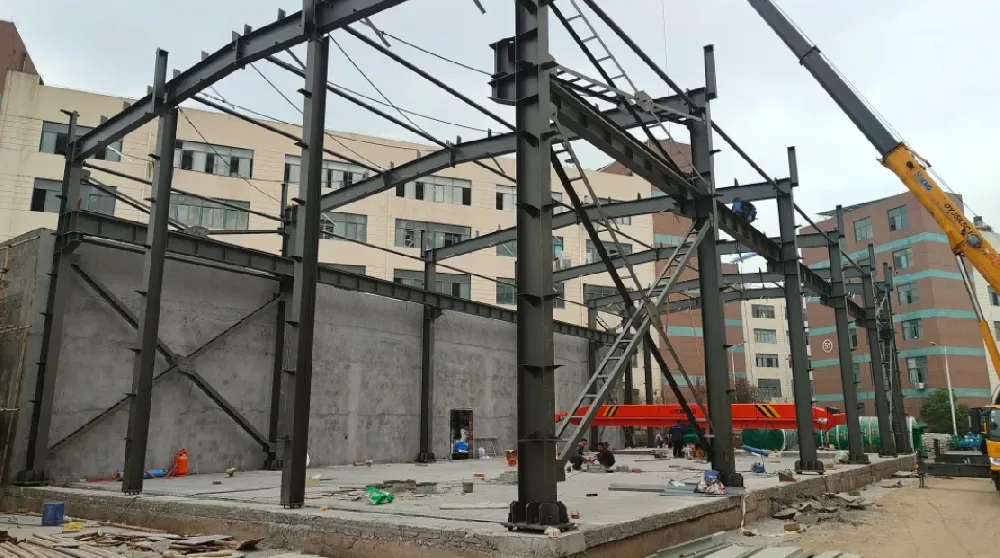
- Station building and layout — a dedicated compressor house sized for today’s demand with space reserved for the next expansion stage.
- Compression — multiple screw compressor units in a duty/assist configuration, so the set follows the park’s day–night demand curve efficiently and no single machine is a single point of failure.
- Air treatment — refrigerated drying and filtration stages sized for the tenants’ process classes, with receiver storage that buffers peak draws from individual factories.
- Distribution — an outdoor pipe ring with insulated branches feeding each production building, deliberately routed and sloped so condensate never travels with the air.
- Monitoring and metering — pressure, dew point, and flow visible at the station, with metered supply to each tenant so every factory pays for the air it actually uses.
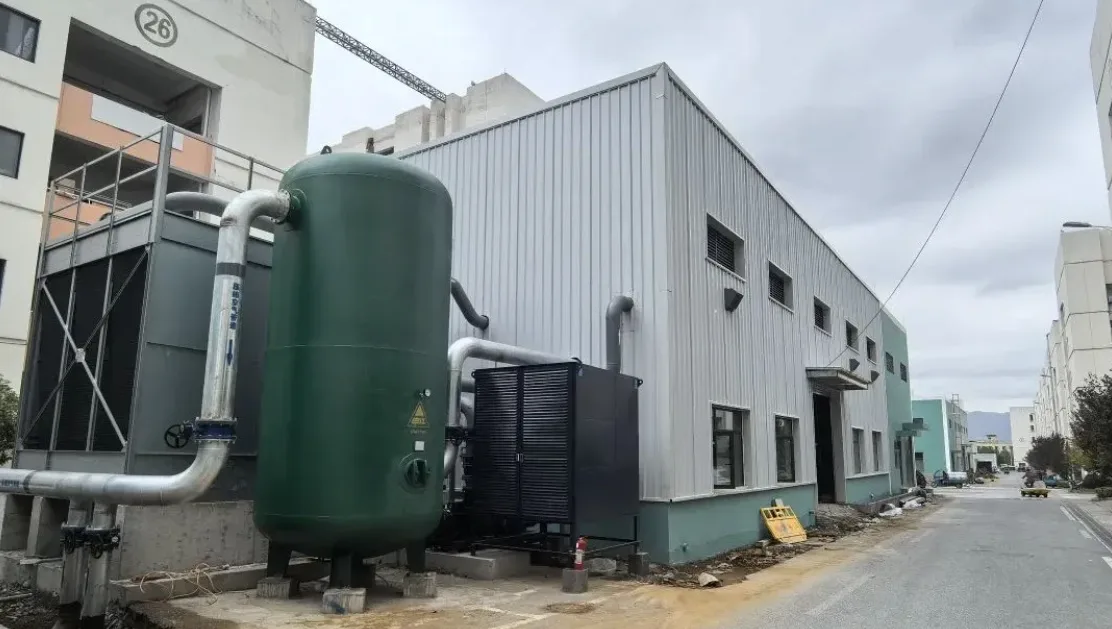
Commissioning followed the sequence SIND applies on every station project: pipework pressure testing, dryer and filter verification under real load, then a staged handover in which each tenant building was connected and balanced while the station kept running. The images in this article show the station from construction to operation.
What tenant factories gain
For the factories inside the park, the change is simple to describe: compressed air arrives at the door as a service. There is no machine to buy, no floor space to give up, and no compressor specialist on the payroll. Supply pressure and air quality are defined in the supply agreement, and usage is read from a flow meter like any other utility. If a tenant’s demand triples with a new production line, the station covers it from reserved capacity instead of an emergency purchase.
The model also changes who carries the risk. Uptime is the station operator’s contractual duty, backed by redundant machines and spare capacity — a stronger position for a tenant than a single aging compressor behind the workshop with no backup.
Inside the station: the components that matter
A central station is a scaled-up version of any complete compressed air system: compression, aftercooling, drying, filtration, storage, condensate management, and controls, each sized against one duty point. If you want the component-by-component anatomy and the reasoning behind each stage, it is covered in detail in our guide to what an integrated compressed air station contains.
For smaller sites that want the same factory-tested approach in a single unit, SIND builds the StationPack SN-V2 vertical integrated screw air compressor station, which packages the same chain into one footprint.
When a central air station makes sense
A park-wide station is not automatically the right answer, but the case becomes strong when most of the following are true:
- Demand density — several factories with meaningful air consumption sit within practical piping distance of each other.
- Growth you can see — new halls or tenants are planned, so capacity built today will be paid for by tomorrow’s connections.
- Energy targets — the park operator reports on, or pays for, the site’s total energy and wants consumption moving in one direction.
- Fragmented ownership — tenants currently run whatever machines they inherited, and quality or pressure complaints keep surfacing.
- One counterparty — the operator prefers a single supply agreement and a single responsible partner over N small vendors.
Planning a park-wide air supply?
SIND engineers centralized compressed air stations for industrial parks and single-facility projects, from first demand survey to commissioning and metered operation. If you are developing a park, upgrading an aging compressor fleet, or evaluating air-as-a-utility for your tenants, talk to the SIND team about your demand profile — and see the complete air station guide for what a properly engineered system should include.
